DG Set Installation Guide: kVA Sizing, CPCB IV+, Earthing & AMF
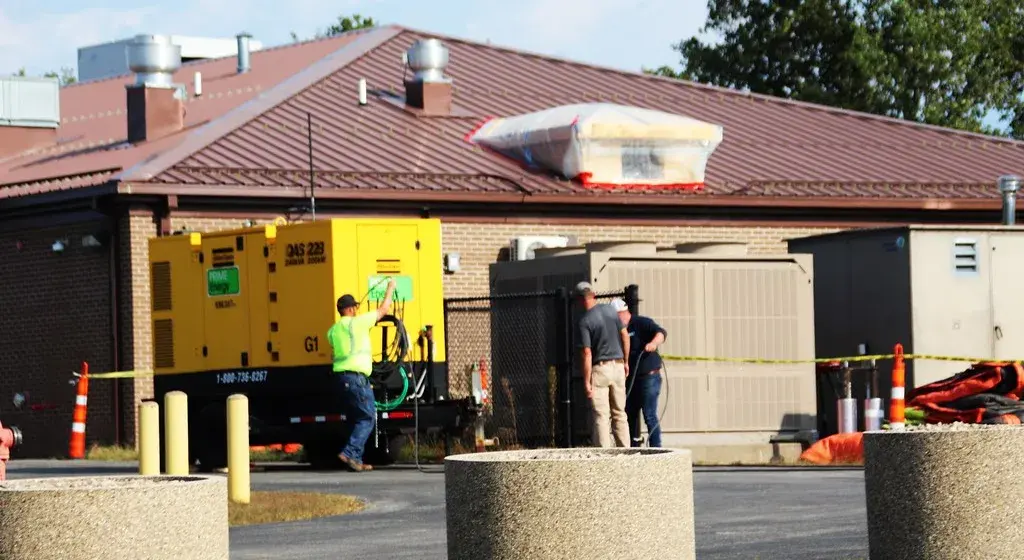
A diesel generator (DG) set is only as reliable as its installation. The same engine can run smoothly for years or trip, overheat, vibrate and smoke within months — and the difference is almost always sizing, ventilation, exhaust routing, earthing and the changeover arrangement, not the generator itself.
This guide walks through everything that goes into a proper DG installation for a home, housing society, shop, hospital or factory: how to calculate the kVA you actually need, what silent sets and CPCB IV+ norms mean, how the plinth, exhaust and fuel system should be laid out, how manual changeover, ATS and AMF panels differ, why a DG needs its own earth pits, and what maintenance keeps it ready for the next power cut.
How to size a DG set in kVA
Size a DG set by adding up the running load you want to back up in kW, dividing by the power factor (usually 0.8) to get kVA, and then adding headroom for motor starting and future growth. For example, 24 kW of running load at 0.8 power factor needs about 30 kVA before any margin.
Starting current is where most undersized generators fail. Motors, pumps, lifts, compressors and air conditioners draw several times their running current for a few seconds when they start — a direct-on-line motor can pull roughly 6–8 times its rated current. If several large motors start together, the generator's voltage dips, contactors drop out and the set can stall. Staggering motor starts, or using soft starters and star-delta starters, lets you choose a smaller set.
Aim for the generator to run at roughly 60–80% of its rating under normal backup load. A heavily oversized set spends its life lightly loaded, which causes incomplete combustion, carbon build-up and "wet stacking" (unburnt fuel in the exhaust), while an undersized set overheats and struggles on every start.
- List every load you want on backup — lights, fans, pumps, lifts, ACs, machines — with its kW rating
- Mark which loads start with a motor and their starting method
- Decide whether the DG backs up the whole building or only essential circuits
- Add a margin for future load, typically 20–25%
- Check whether the load is single-phase or three-phase and how evenly it can be balanced across phases
Typical DG ratings by application
The right rating depends on your actual load list, but these ranges give a realistic starting point before a site survey.
| Application | Typical range | Notes |
|---|---|---|
| Independent house | 5–15 kVA | Single or three phase; ACs drive size |
| Shop / small office | 10–30 kVA | Often essential circuits only |
| Housing society | 62.5–250 kVA+ | Lifts, pumps, common lighting |
| Hospital / clinic | Load-specific | Often two sets for redundancy |
| Factory / workshop | Load-specific | Motor starting decides the size |
Silent (canopy) sets and CPCB IV+ norms
Almost every new DG set up to 800 kW sold in India today must comply with the CPCB IV+ emission norms, which came into force in July 2023 and replaced the older CPCB II standard. CPCB IV+ sets use cleaner engine technology with electronic controls and exhaust after-treatment, so they emit significantly less particulate matter and NOx.
Gensets are also expected to come in an acoustic enclosure (canopy) that meets the CPCB noise limits. A silent canopy houses the engine, alternator, control panel and usually the fuel tank in a weatherproof, sound-insulated box, which makes it suitable for residential areas, commercial complexes and hospitals.
When buying, check the set's type-approval and conformity documentation for CPCB IV+ and noise compliance. Because CPCB IV+ engines depend on electronics and after-treatment, using the right fuel quality and following the service schedule matters more than it did with older sets.
Location, plinth and anti-vibration mounting
Place the DG on a level, reinforced concrete plinth in a well-ventilated spot with clear access on all sides for servicing, as close to the main panel as practical to keep cable runs short. The plinth should be slightly larger than the set's footprint, raised above the surrounding floor so rainwater doesn't collect under it, and cured properly before the set is placed.
Anti-vibration mounts (AVMs) between the base frame and the plinth stop vibration travelling into the building structure. Flexible connections on the exhaust and fuel lines, and flexible cable glands, prevent vibration from cracking pipes and loosening terminals over time. For rooftop or terrace installations, a structural engineer should confirm the slab can carry the set's weight and vibration.
Exhaust, ventilation and fuel
The exhaust must be routed away from windows, doors, air intakes and occupied areas, with the discharge point high enough to disperse fumes safely. CPCB guidelines set a minimum stack height for DG sets based on the building height and the generator rating, so the exhaust pipe on a society or commercial set often has to be carried well above the roofline. Long exhaust runs need the right pipe diameter, minimal bends and support brackets to avoid back pressure, which cuts power and raises engine temperature.
Enclosed DG rooms need enough fresh-air inlet and hot-air outlet area to keep the engine cool and stop it re-breathing its own hot air. Canopy sets placed outdoors still need clearance around the air intake and radiator discharge.
The fuel tank should be sized for the backup duration you need, fitted with a level indicator and drain, and kept clean. Large external fuel storage is subject to petroleum and fire safety rules, so it is usually easier to plan runtime around the set's built-in tank plus a safe top-up arrangement.
Manual changeover vs ATS vs AMF panel
The changeover decides how your building switches between grid and generator, and it must make it impossible for the DG to back-feed the grid. CEA safety regulations require a generator connected to an installation to be interlocked so it can never energise the supply company's lines — which protects linemen working on the network.
| Option | How it works | Best for |
|---|---|---|
| Manual changeover | You start the DG and flip the switch | Homes, small shops |
| ATS | Switches load automatically between sources | Offices, societies |
| AMF panel | Auto-starts DG on mains failure and switches load | Hospitals, lifts, industry |
DG earthing: why two separate earth pits
A DG set needs its own dedicated earthing, and common Indian practice is two separate earth pits: one for the generator neutral and one for the body. Larger sets often get additional pits for each so that one failed pit or connection doesn't leave the set unprotected. The neutral earth provides the reference point for the generator's star point, while the body earth carries fault current from the frame, canopy and control panel so a fault trips the protection instead of making the enclosure live.
Keeping neutral and body earths separate at the pits (and bonded as the system design requires) keeps neutral-to-earth voltage low, which protects sensitive electronics and inverters running on DG power. Earth pits for DGs are usually pipe, plate or chemical earthing, tested after installation and at least once a year.
Cabling, protection and commissioning
Power cables from the DG to the changeover and main panel must be sized for the full-load current of the set, the length of the run and the installation method, with proper glands and lugs. The DG output should have its own breaker (MCCB or ACB, depending on rating) with overload and short-circuit protection coordinated with the downstream breakers.
Commissioning should cover a no-load run, a step-load test, a check that voltage and frequency hold steady as load is applied and removed, a test of every safety shutdown (low oil pressure, high temperature, over-speed), changeover or AMF operation, and earth-resistance readings. A handover should include these readings and a clear starting and shutdown procedure for whoever operates the set.
DG maintenance and warning signs
A standby DG fails most often because it sat idle — so regular test runs under load matter as much as oil changes. Follow the manufacturer's schedule for oil, oil filter, fuel filter, air filter and coolant, based on running hours and time, whichever comes first.
- Run the set regularly, ideally with some load, rather than only idling it
- Check battery voltage and terminals — a flat starter battery is the most common no-start cause
- Watch for black or white smoke, unusual knocking or excessive vibration
- Look for oil, fuel or coolant leaks under the set and around the canopy
- Note voltage or frequency swings when large loads start
- Keep the fuel tank clean and drain water from the separator as specified
DG set installation in Zirakpur & the Tricity
Electrons handles DG set installation end to end for homes, societies, shops, hospitals and industry across Zirakpur, Panchkula, Chandigarh and Mohali. We visit the site, prepare a load list and size the set in kVA, plan the plinth, anti-vibration mounting and exhaust route, wire the manual changeover, ATS or AMF panel, install dedicated DG earth pits and power cabling, and test and commission the set with you. After handover, we can look after servicing through an AMC, with 24/7 emergency call-outs if the set lets you down.
Frequently asked questions
What size generator do I need for my house?
Most independent houses need between 5 and 15 kVA, depending mainly on how many air conditioners and pumps you want to run on backup. Add up the kW of everything you want powered, divide by 0.8 to get kVA, and add around 20–25% for motor starting and future load.
What is CPCB IV+ in a DG set?
CPCB IV+ is the current emission standard for diesel generator sets up to 800 kW in India, in force since July 2023. CPCB IV+ sets use cleaner engines with electronic controls and exhaust after-treatment, emitting much less particulate matter and NOx than older CPCB II sets.
What is the difference between an ATS and an AMF panel?
An ATS (automatic transfer switch) automatically moves the load between grid and generator. An AMF (auto mains failure) panel goes further — it detects a power cut, starts the generator, transfers the load, and switches back and shuts the DG down when mains power returns.
How many earth pits does a DG set need?
Common practice in India is at least two separate earth pits — one for the generator neutral and one for the body (frame, canopy and panel) — with larger sets often getting extra pits for each. Keeping them separate keeps neutral-to-earth voltage low and ensures a body fault trips the protection.
Can I install a DG set on the roof?
Yes, if a structural engineer confirms the slab can carry the set's weight and vibration, and the set sits on a proper plinth with anti-vibration mounts. The exhaust, fuel access and cable route to the main panel also need to be planned before the set is lifted.
How often should a DG set be serviced?
Follow the manufacturer's schedule based on running hours or time, whichever comes first, for oil, filters and coolant. Standby sets should also be test-run regularly, ideally under load, and have their starter battery checked, since long idle periods cause most no-start problems.