Vertical-Axis Wind Turbines: VAWT vs HAWT for Homes and Farms
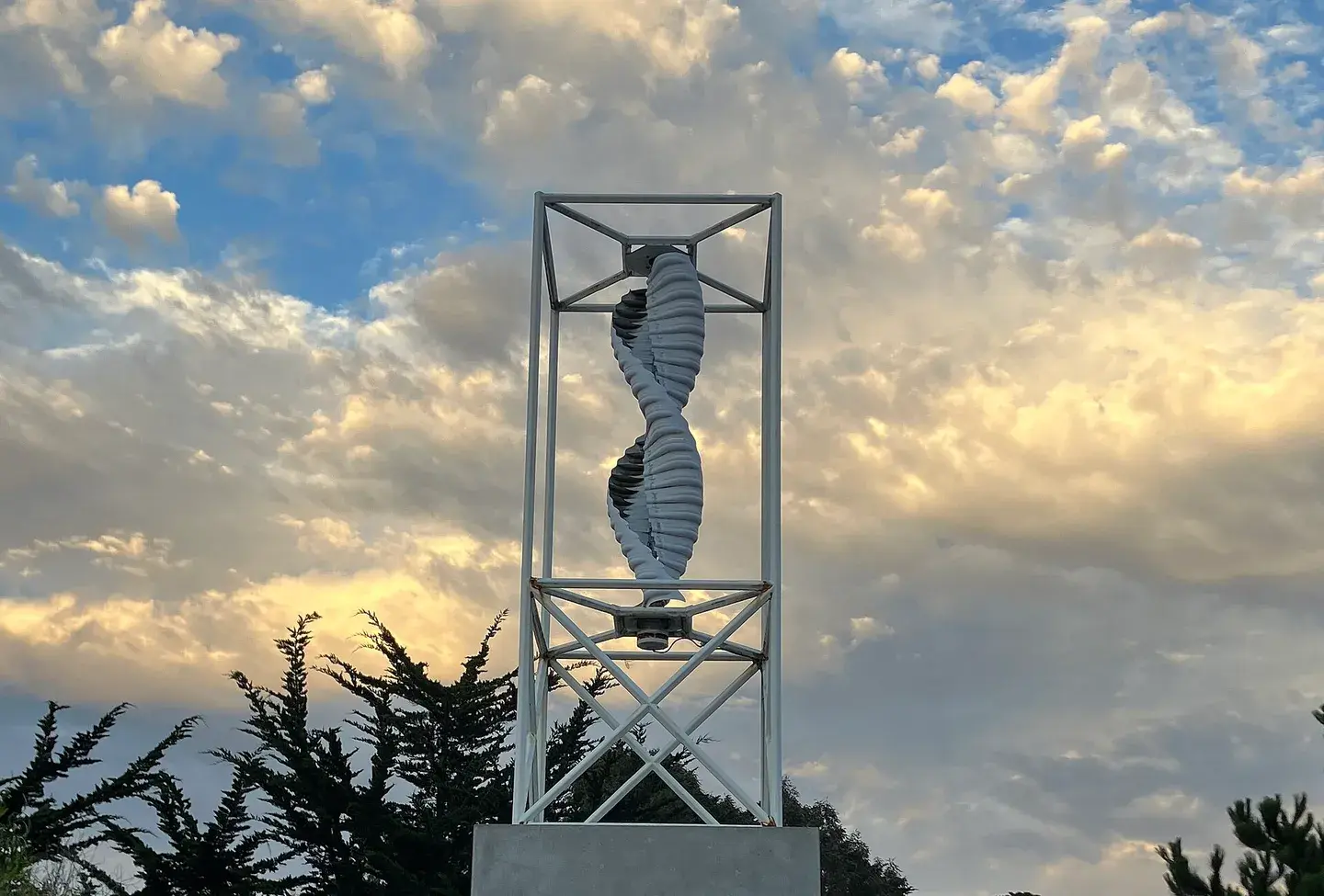
Small wind turbines can add clean power to a home, farm, school or business — especially at night and during cloudy or monsoon weather, when solar output drops. Vertical-axis wind turbines (VAWTs) in particular are popular for rooftops and built-up areas because they catch wind from any direction and run quietly.
But wind is far more site-dependent than solar. A turbine in the wrong spot can produce very little, however good the machine. This guide explains how VAWTs work, how they compare with conventional horizontal-axis turbines, what wind speeds you really need, how a site is assessed, and why a hybrid solar + wind + battery system is often the most practical way to use wind power.
What is a vertical-axis wind turbine?
A vertical-axis wind turbine has blades that rotate around an upright shaft, so it accepts wind from any direction without needing to turn to face it. The generator and gearbox (if any) can sit at the base, which makes the turbine easier to mount and service.
The two common designs are drag-type (Savonius), with scoop-shaped blades that start easily in light winds, and lift-type (Darrieus and helical/H-rotor), with aerofoil blades that spin faster and are more efficient. Some designs combine both, using a Savonius section to help a Darrieus rotor start.
VAWT vs HAWT: the honest comparison
Horizontal-axis wind turbines (HAWTs) — the familiar three-blade propeller type — are generally more efficient at converting steady wind into electricity, which is why large wind farms use them. VAWTs trade some of that efficiency for practical advantages in small-scale and built-up sites.
| Factor | VAWT (vertical) | HAWT (horizontal) |
|---|---|---|
| Wind direction | Any direction, no yaw | Must turn to face wind |
| Gusty/turbulent wind | Copes better | Output drops, more wear |
| Efficiency in steady wind | Lower | Higher |
| Noise | Low | Higher at speed |
| Mounting | Rooftops, short poles | Tall towers, open land |
| Maintenance access | Generator near base | Nacelle at the top |
How much wind do you actually need?
A small wind turbine needs a site with a reasonably high average wind speed to be worthwhile, because the power in wind rises with the cube of wind speed. Double the wind speed and the available power rises roughly eight times — so a site averaging 5 m/s has far more potential than one averaging 3 m/s, even though the numbers look close.
Most small turbines start turning (cut-in) at around 2–3 m/s, but they only reach their rated output at much higher speeds, often 10–12 m/s or more. The rated kW on a brochure is what the turbine produces at that rated speed, not what it produces on an average day. Energy produced over a year depends on how many hours the site actually spends at useful wind speeds.
Much of inland north India, including the Tricity, has modest average wind speeds at rooftop height compared with coastal and hilly areas. That doesn't rule wind out, but it makes site selection and realistic expectations essential — open farmland, elevated rooftops above surrounding buildings and exposed hill sites perform far better than sheltered city roofs.
Site assessment: what we check
A proper site assessment is the most important step in any wind project, and it should happen before any turbine is chosen. Buildings, trees and terrain slow the wind and create turbulence, so the same turbine can perform very differently a few metres higher or a few metres away.
- Local wind data and, for larger projects, on-site anemometer measurement over several months
- Height of the roof or pole relative to nearby buildings, trees and water tanks
- Prevailing wind directions through the seasons, including monsoon
- Structural capacity of the roof or foundation for the turbine and its wind loads
- Distance to the inverter, battery and main panel for cable runs
- Noise and vibration considerations for occupants and neighbours
Domestic, rooftop and medium-scale turbines
Domestic VAWTs are typically small units for rooftop or pole mounting that add supplementary power to a home, often charging a battery bank alongside solar. They suit homes, farmhouses and small businesses with an exposed roof or open plot.
Medium-scale VAWTs are larger machines for farms, schools, resorts and businesses with open land. Mounted on a dedicated pole or tower on their own foundation, they can reach cleaner, stronger wind and produce meaningfully more energy than a rooftop unit. At every scale, mounting height and clearance from obstacles matter more than the turbine's headline rating.
Why hybrid solar + wind with batteries works well
Solar and wind complement each other: solar peaks on clear, sunny days, while wind is often stronger at night, in winter and during stormy or monsoon weather. Combining them smooths out daily and seasonal gaps, so a battery bank is recharged more consistently than with either source alone.
In a hybrid system, the wind turbine and solar panels feed a battery bank through a hybrid charge controller or compatible inverter, with protection to stop the turbine over-speeding and dump excess energy when the battery is full. For most sites in the Tricity, solar will be the main source and wind a useful supplement — which is why we size the system around your realistic wind resource, not the turbine's peak rating.
Installation and safety
A wind turbine is mounted on a structure that must withstand not just its weight but the wind forces acting on it, including storms. Rooftop installations need a structural check and vibration isolation; pole-mounted turbines need a properly designed foundation and guying where required.
Electrically, the turbine needs a controller with over-speed protection and braking, correctly sized cabling, DC or AC protection devices, surge protection, and proper earthing — plus a lightning arrester for turbines on exposed poles or high roofs, since they are often the highest point on the site.
Maintenance and warning signs
VAWTs have few moving parts, but regular inspection keeps them safe and productive. Bolts, mounts and blades should be checked periodically and after storms, bearings inspected for noise, and the controller and battery checked for correct charging.
- New rattling, grinding or whistling noises
- Visible wobble or increased vibration at the mount
- Cracked, chipped or loose blades
- Turbine not spinning in winds where it used to
- Battery not charging from the turbine, or controller fault indications
Vertical wind turbines in Zirakpur & the Tricity
Electrons supplies and installs vertical-axis wind turbines for homes, rooftops, farms and commercial sites across Zirakpur, Panchkula, Chandigarh and Mohali — standalone or as part of a hybrid solar + wind system with battery backup. We start with a site wind assessment and give you a realistic view of what the site can produce, then handle mounting, structural checks, cabling, controller and battery integration, earthing and testing, followed by servicing and AMC.
Frequently asked questions
Are vertical-axis wind turbines good for homes?
They can be, on the right site. VAWTs accept wind from any direction, run quietly and cope with gusty rooftop winds, but they only produce useful energy where the average wind speed is reasonably high. A site assessment should confirm this before you buy.
What is the difference between VAWT and HAWT?
A VAWT spins around a vertical shaft and works with wind from any direction, while a HAWT is the three-blade propeller type that must turn to face the wind. HAWTs are more efficient in steady wind on tall towers; VAWTs are better suited to rooftops, turbulent wind and low-noise sites.
What wind speed does a small wind turbine need?
Most small turbines start turning at around 2–3 m/s but only reach rated output at around 10–12 m/s or more. Because power rises with the cube of wind speed, the site's average wind speed decides how much energy you'll actually get.
Can a wind turbine be installed on a rooftop?
Yes, if the roof is high and exposed relative to surrounding buildings and a structural check confirms it can take the turbine's weight, wind loads and vibration. Sheltered roofs surrounded by taller buildings usually produce very little.
Is solar or wind better for my home?
For most homes in inland north India, solar produces more energy for the money. Wind is best used as a supplement in a hybrid solar + wind + battery system on an exposed site, where it helps at night and in cloudy or monsoon weather.