Hybrid Inverter & LFP Battery Guide: Sizing, Life and Backup
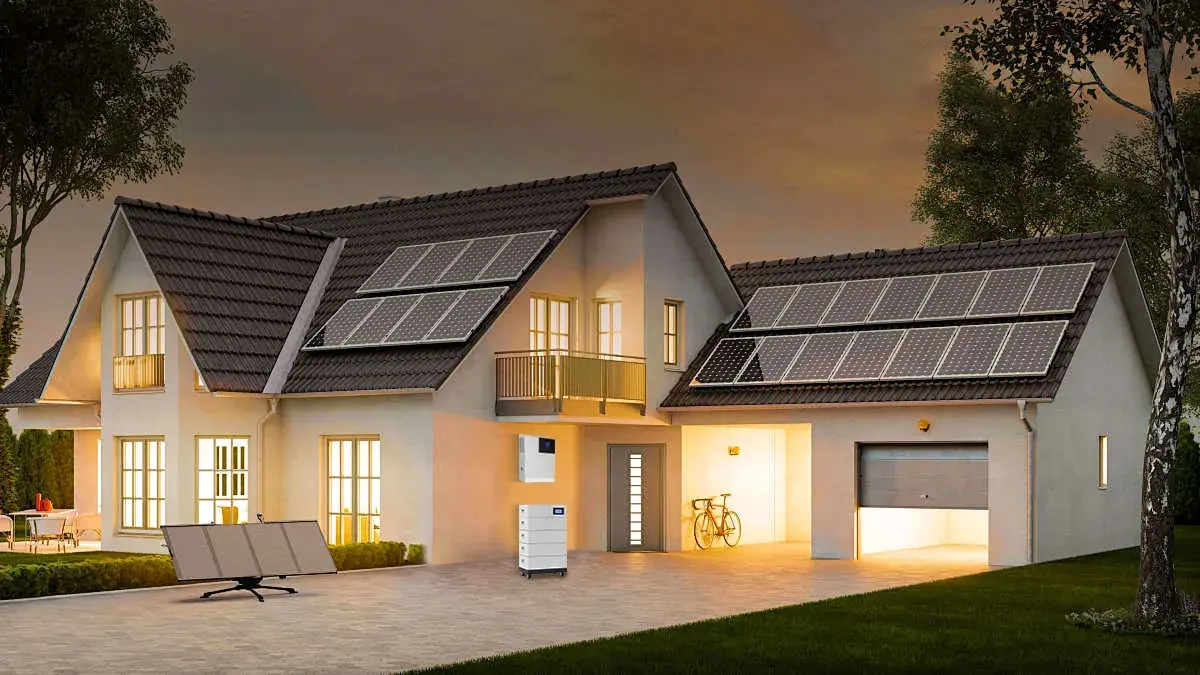
A hybrid inverter with a lithium iron phosphate (LFP) battery is the modern replacement for the old inverter-and-tubular-battery setup. It stores solar power for the evening, keeps your home or business running through power cuts, and does it with a battery that lasts many times longer and needs no topping up.
This guide explains how hybrid inverters and LFP batteries work together, how LFP compares with lead-acid, how to size a battery in kWh and pick a single-phase or three-phase inverter, what switchover time and cycle life really mean, and when high-voltage stacked batteries or a commercial BESS make sense.
What a hybrid inverter does
A hybrid inverter is a single unit that manages solar panels, a battery and the grid together. It runs your load from solar first, charges the battery with any surplus, exports extra power to the grid where net metering allows, and draws from the battery or grid when solar isn't enough.
When the grid fails, the hybrid inverter isolates your backed-up circuits from the grid and powers them from the battery and solar. Typical residential units range from 3–6 kW single-phase, while 8–30 kW three-phase models serve larger homes, shops and small businesses. Many are IP65/IP66 rated so they can be mounted outdoors or in a utility area.
LFP vs lead-acid batteries
LFP (lithium iron phosphate) batteries last far longer, deliver more usable energy and need almost no maintenance compared with lead-acid batteries. LFP is also one of the most thermally stable lithium chemistries, which is why it has become the standard for home and commercial storage.
Lead-acid batteries are cheaper upfront, but you can only use part of their capacity without shortening their life, they need regular water topping (flooded types), and they typically need replacing within a few years. Over the life of a solar system, LFP usually works out cheaper per unit of energy stored.
| Feature | LFP lithium | Lead-acid |
|---|---|---|
| Usable capacity | Most of rated capacity | Around half for long life |
| Cycle life | Up to 6,000 cycles | Hundreds to ~1,500 |
| Maintenance | None (sealed, BMS) | Water topping, terminal care |
| Weight & space | Compact, wall/rack | Heavy, large footprint |
| Charging speed | Fast | Slow, needs full charges |
| Upfront cost | Higher | Lower |
How to size a battery in kWh
Size a battery by multiplying the load you want to back up (in kW) by the hours of backup you need, then allowing for usable depth of discharge and inverter losses. For example, running 1.5 kW of essential loads for 4 hours needs about 6 kWh of energy, so a battery in the 7–8 kWh range gives comfortable headroom.
Home and small-business LFP batteries typically come as 5.12–20.4 kWh wall-mounted or rack units, and many are modular, so you can start with one module and add more later. A 5.12 kWh module, for instance, is a 51.2 V, 100 Ah battery.
- List backed-up loads: lights, fans, fridge, Wi-Fi, computers, pumps, one AC
- Estimate hours of backup needed — power cuts, or evening use from stored solar
- Energy needed (kWh) = load (kW) × hours
- Add around 15–25% for depth-of-discharge limits and inverter losses
- Check the inverter can deliver the peak power of motors and ACs starting
Single-phase vs three-phase hybrid inverters
Match the inverter to your electricity connection: single-phase homes use a single-phase inverter, while three-phase connections should use a three-phase hybrid inverter if you want to back up loads on all three phases.
Single-phase hybrid inverters in the 3–6 kW range suit most homes. Three-phase models from 8–30 kW suit larger homes with three-phase supply, shops, clinics and offices — and they are essential if you need to run three-phase equipment such as some pumps, lifts or machines on backup. Choose the power rating based on the peak load you'll run at once, not just the average.
Switchover time: will my computer stay on?
Modern hybrid inverters switch to battery in under 10 milliseconds, which is fast enough that most computers, routers, CCTV recorders and TVs keep running without a restart. That switchover time is measured from the moment the grid fails to the moment the inverter is supplying the backed-up circuits.
Very sensitive equipment such as servers or medical devices may still need an online UPS, which has zero transfer time. For most homes and offices, a sub-10 ms hybrid inverter removes the flicker and reboot problems of older inverters.
Cycles, depth of discharge and battery life
A battery's life is measured in charge-discharge cycles, and good LFP batteries are rated for up to 6,000 cycles with a design life of around 15 years. One cycle roughly equals one full discharge and recharge; if you cycle the battery once a day, 6,000 cycles is more than 16 years of daily use.
Life depends on depth of discharge (how much of the battery you use per cycle), temperature and charging rate. Every LFP battery has a battery management system (BMS) that protects the cells from over-charge, over-discharge, over-current and extreme temperatures. Installing the battery in a shaded, ventilated spot away from direct sun helps it reach its full design life.
High-voltage stacked batteries and commercial BESS
For larger homes and businesses, high-voltage (HV) stacked LFP batteries combine several modules in series into a single tower, typically 25–100 kWh. HV batteries work with compatible high-voltage hybrid inverters, run at lower current for the same power, and are more efficient for larger three-phase systems.
Commercial and industrial (C&I) battery energy storage systems (BESS) start from around 261 kWh and scale up in cabinets or containers. Factories, hospitals, cold storages and commercial buildings use them for backup, reducing diesel generator run-time, shifting solar power into the evening, and managing peak demand. C&I systems include their own BMS, fire detection and suppression, and energy management software.
Installation, safety and monitoring
Batteries and hybrid inverters should be installed on a solid wall or floor in a dry, ventilated, shaded location, with correctly sized DC cables, DC breakers or fuses between battery and inverter, surge protection, and proper earthing. The inverter's backup output should feed a separate distribution board for essential loads, so critical circuits are clearly separated from high-draw appliances you don't want on the battery.
Most modern systems include app monitoring, so you can see solar generation, battery state of charge, grid import/export and consumption in real time, and spot problems early.
Hybrid inverters & LFP batteries in Zirakpur & the Tricity
Electrons designs and installs hybrid inverter and LFP battery systems for homes, shops and industry across Zirakpur, Panchkula, Chandigarh and Mohali — from single-phase home backup to three-phase and commercial BESS. We visit the site, work out your backup loads and hours, size the battery in kWh and the inverter in kW, separate essential circuits onto a backup DB, install with proper DC protection and earthing, and test the switchover before handover. We also offer maintenance and AMC to keep the system performing.
Frequently asked questions
Is an LFP battery better than a lead-acid battery?
For most solar and backup systems, yes. LFP batteries offer up to 6,000 cycles, let you use most of their rated capacity, need no maintenance and take far less space. Lead-acid is cheaper upfront but wears out much sooner and needs regular care.
How many kWh battery do I need for my home?
Multiply the load you want to back up in kW by the hours of backup you need, then add about 15–25% for losses and depth-of-discharge limits. Many homes backing up lights, fans, a fridge and electronics for a few hours use 5–10 kWh.
How long does an LFP battery last?
Good LFP batteries are rated for up to 6,000 cycles with a design life of around 15 years. Actual life depends on how deeply the battery is discharged each day, operating temperature and charging rates.
Can a hybrid inverter run an air conditioner?
Yes, if the inverter's power rating covers the AC's running and starting load and the battery has enough kWh for the hours you need. Inverter ACs are easier to back up because they start with a much lower surge.
What is the switchover time of a hybrid inverter?
Modern hybrid inverters switch to battery in under 10 milliseconds, fast enough that most computers, routers and TVs keep running without restarting during a power cut.
Can I add more batteries later?
Many LFP systems are modular, so you can start with one battery module and add more as your needs grow, as long as the inverter and battery model support expansion. It is best to plan for expansion when choosing the inverter.